Doug Hansen
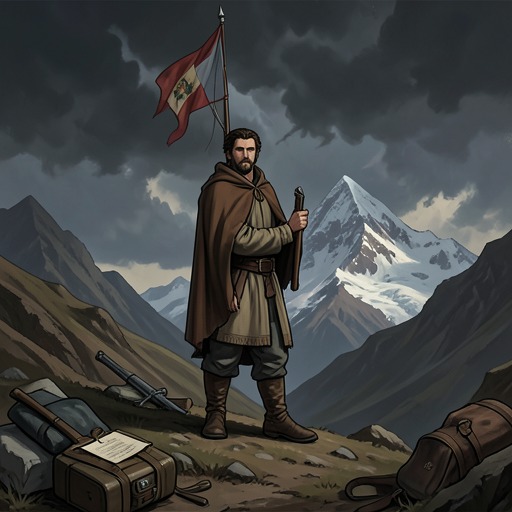
The ClimbDoug Hansen was a client-climber on Rob Hall’s Adventure Consultants expedition, and his late summit bid became one of the defining, unresolved episodes of the 1996 Everest disaster. Having once turned back on the mountain, he returned with Hall’s encouragement to try again; on summit day he continued upward after saying he was cold and going back. He reached the summit after 4:00 P.M., deepening the delay that placed Hall and others in danger. Hansen vanished somewhere between the Hillary Step and the South Summit, and the surviving evidence cannot explain exactly what happened to him.
Identity and Earlier Attempt
Hansen was one of Hall’s clients, sharing a Camp IV tent with Andy Harris, Beck Weathers, and Lou Kasischke. On the evening before the summit attempt, Kasischke recalled that everyone in the tent except guide Harris thought setting out the next day was a bad idea. They were concerned that the team had not had a full twenty-four hours of good weather and feared that conditions would make descent dangerous. Hansen’s presence in this discussion places him among the clients who recognized the risk before the climb began, though the account does not say how he argued or voted.
Hansen had climbed with Hall’s 1995 Everest expedition. Hall turned his clients around on the South Summit, a decision that left Hansen severely disappointed. Hall encouraged his return in 1996, telling him he wanted Hansen to have another chance. That history gives the later summit bid its personal force: the ascent was not simply another client’s progress toward the top, but a renewed attempt after a previous expedition had stopped short.
The Decision to Continue
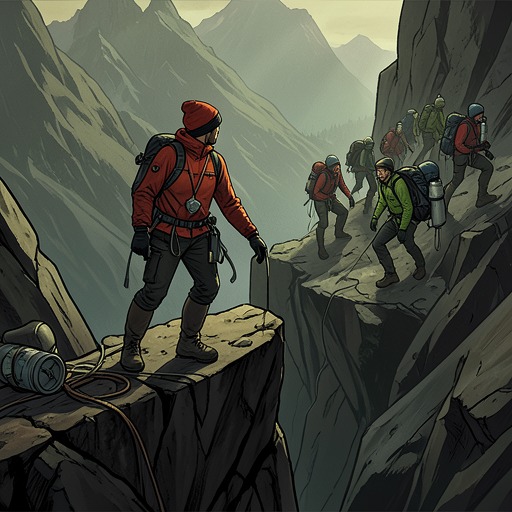
Before daylight on summit day, Hansen was climbing ahead of Kasischke. When Kasischke caught up with him, Hansen stepped out of line and said he was cold and going back. His statement was a clear indication, at that moment, that he intended to turn around. Yet a little after 4:00 P.M., as Scott Fischer was leaving the summit, Hansen was staggering toward Hall, who shouldered him onward to the goal Hall had encouraged him to reach.
The change between Hansen’s announced retreat and his eventual arrival at the summit remains unexplained. Kasischke later wondered why Hansen changed his mind after appearing so definite, and speculated that Hall might have talked him into continuing. This is a question, not an established account of what Hall said. The book also notes that Hall’s decision to encourage Hansen to continue has remained one of the tragedy’s most perplexing questions: Hall was an experienced guide known for following the rules, yet he did not turn Hansen around. The evidence supports the importance of the decision and its consequences, but not a definitive motive for it.
Hansen reportedly did not summit until after 4:00 P.M. His progress came amid a day already marked by delays and by climbers from Hall’s, Fischer’s, and the Taiwanese expedition moving together on the route. The narrative makes his late ascent consequential without claiming that his actions alone caused the disaster. Hall’s choice to stay with him also drew attention and effort away from other problems developing on the mountain, including the needs of Hall’s guide Andy Harris and the deteriorating condition of Scott Fischer’s party.
Hall, the Summit, and the Disappearance
Near the summit, Lopsang Jangbu Sherpa waited in subzero temperatures while Hall helped Hansen up a rope that Lopsang had fixed using his ice axe as an anchor. Lopsang remained there to ensure the two could make the summit and return securely. The account places Hansen’s summit between approximately 4:15 and 4:30 P.M.; it also reports that he did not reach it until after 4:00 P.M. These details establish the lateness of the ascent and the waiting it required, even though the precise sequence is not fully settled.
The crucial break in the record comes afterward. Hall was with Hansen above the Hillary Step, but when Hall later bivouacked at the South Summit and transmitted messages to Base Camp, Hansen was no longer with him. Somewhere between those two locations Hansen vanished. The book identifies no confirmed witness to his final movements and offers no certain account of whether he fell, became separated, or met some other fate. His disappearance remains a boundary of the surviving narrative rather than a mystery it resolves.
Consequences and Uncertainty
Hall’s encouragement of Hansen to continue is presented as consequential beyond their immediate ascent. The decision affected the choices of Lopsang and Harris, drawing their attention from other developing emergencies. After the storm, Hall was immobile at the South Summit and freezing; Hansen, who had been with him on the evening of May 10, was presumed dead. By the morning of May 12, hope for both men and Harris had been abandoned, and the remnants of Hall’s expedition descended from the mountain.
The book distinguishes what is known from what can only be conjectured. Hansen reached the summit late, was with Hall above the Hillary Step, and was absent by the time Hall bivouacked at the South Summit. His precise fate is unknown. The unresolved circumstances of his disappearance echo the uncertainty surrounding Hall’s decision: the summit is a documented achievement, but neither the reason Hansen pressed on nor the events that separated him from Hall can be recovered with confidence. In that gap, Hansen’s story stands as both a personal return to an unfinished attempt and a stark instance of how a summit goal could carry climbers beyond a safe margin.